French Vinaigrette with a twist!
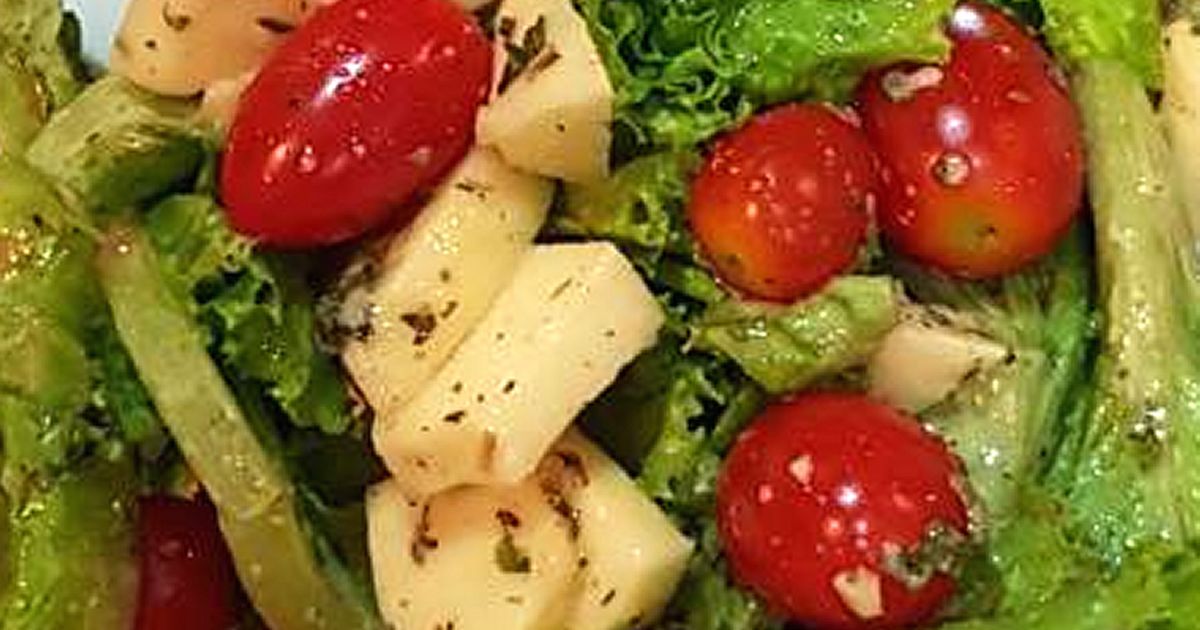
As it is easier to balance the flavors of a large batch of vinaigrette just the way you like it, and get the same result every time, go ahead and make enough to fill a jar that will keep its flavor for a few days. After a few days, the herbs begin to lose their flavor.
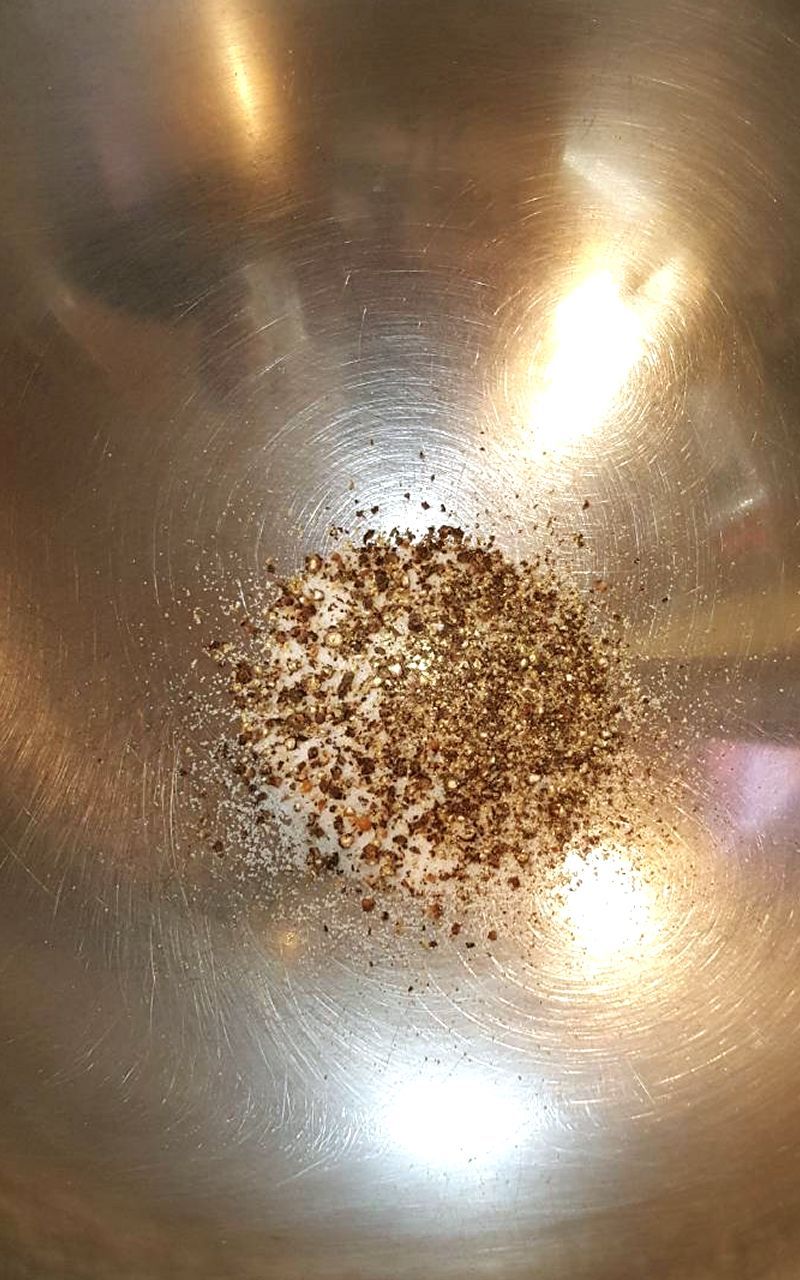
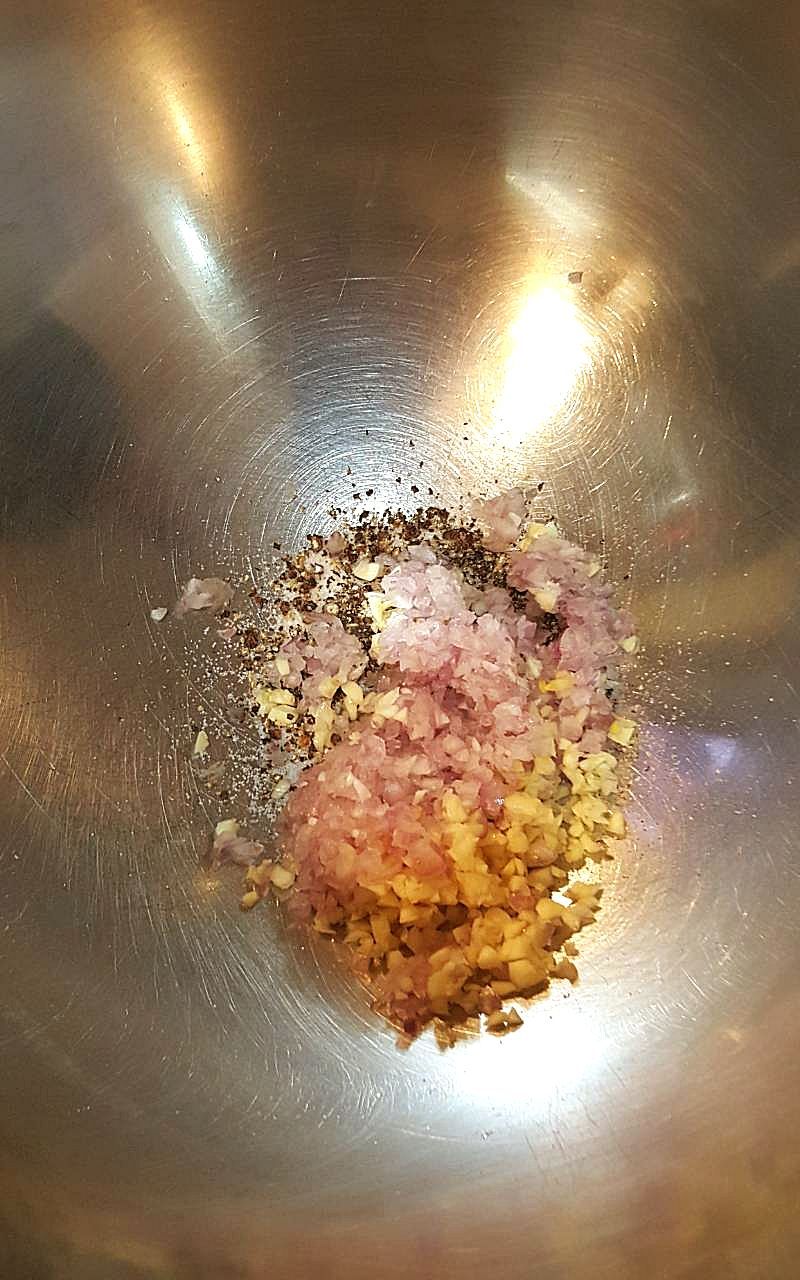
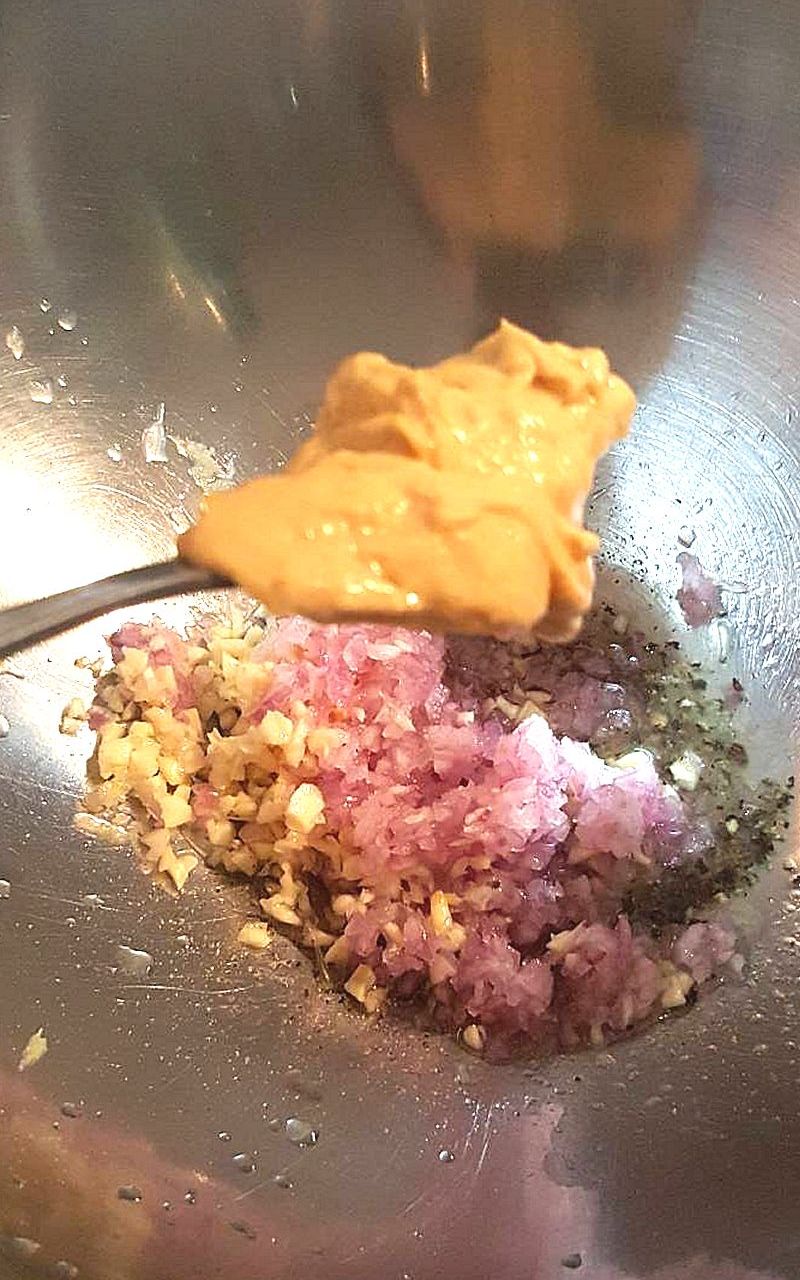
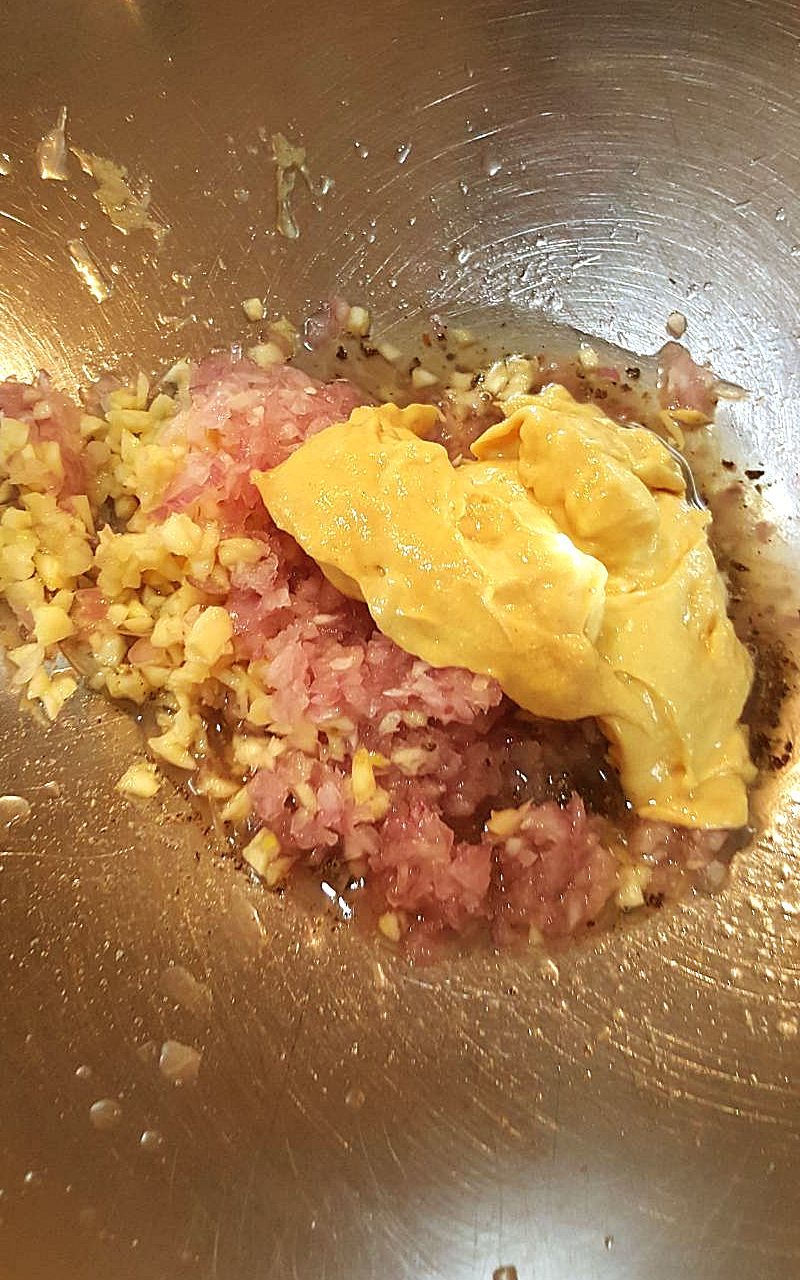
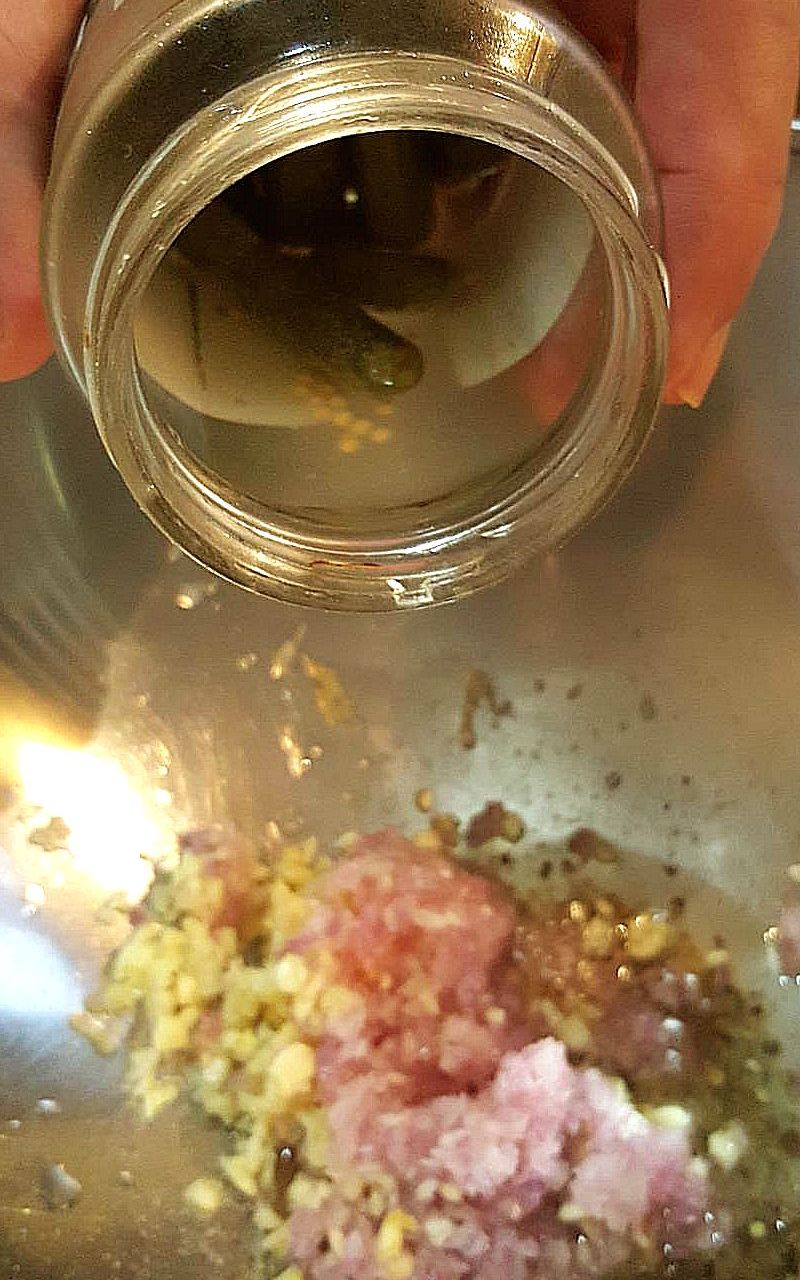
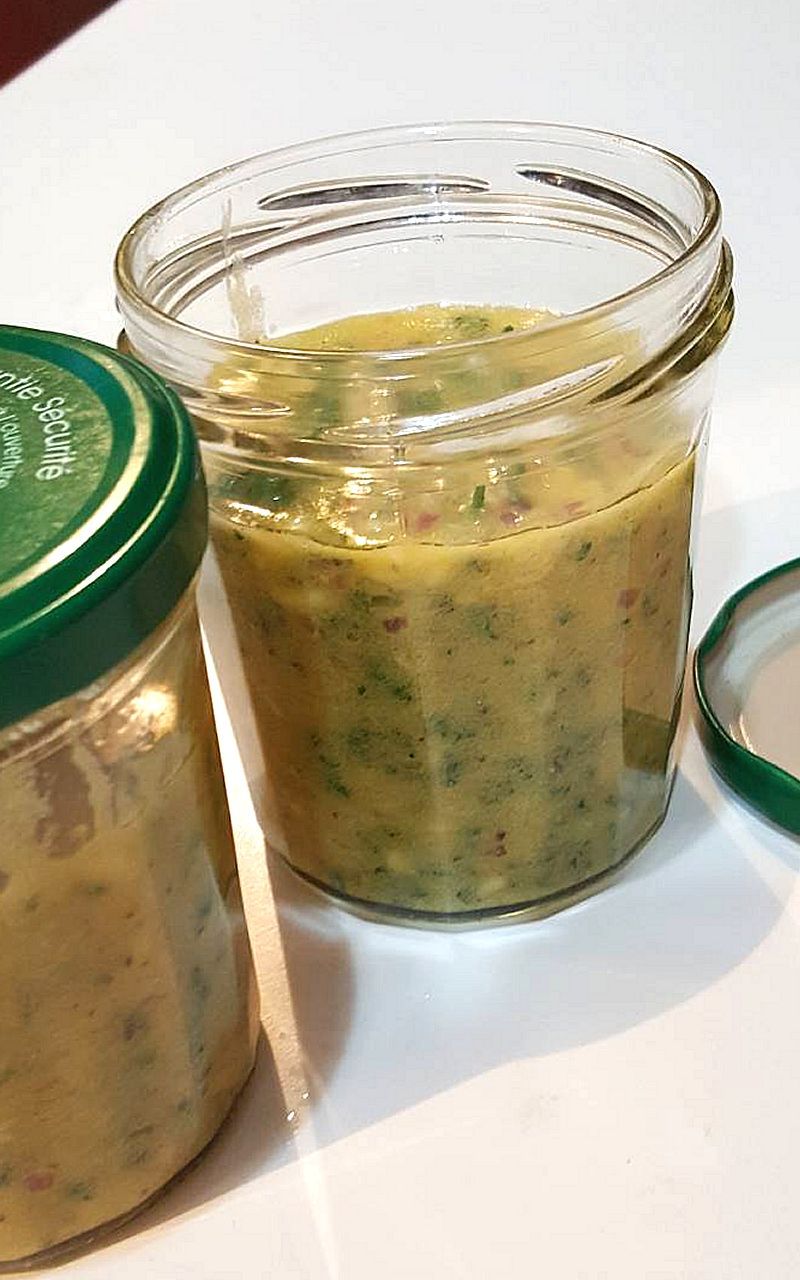
Get started:
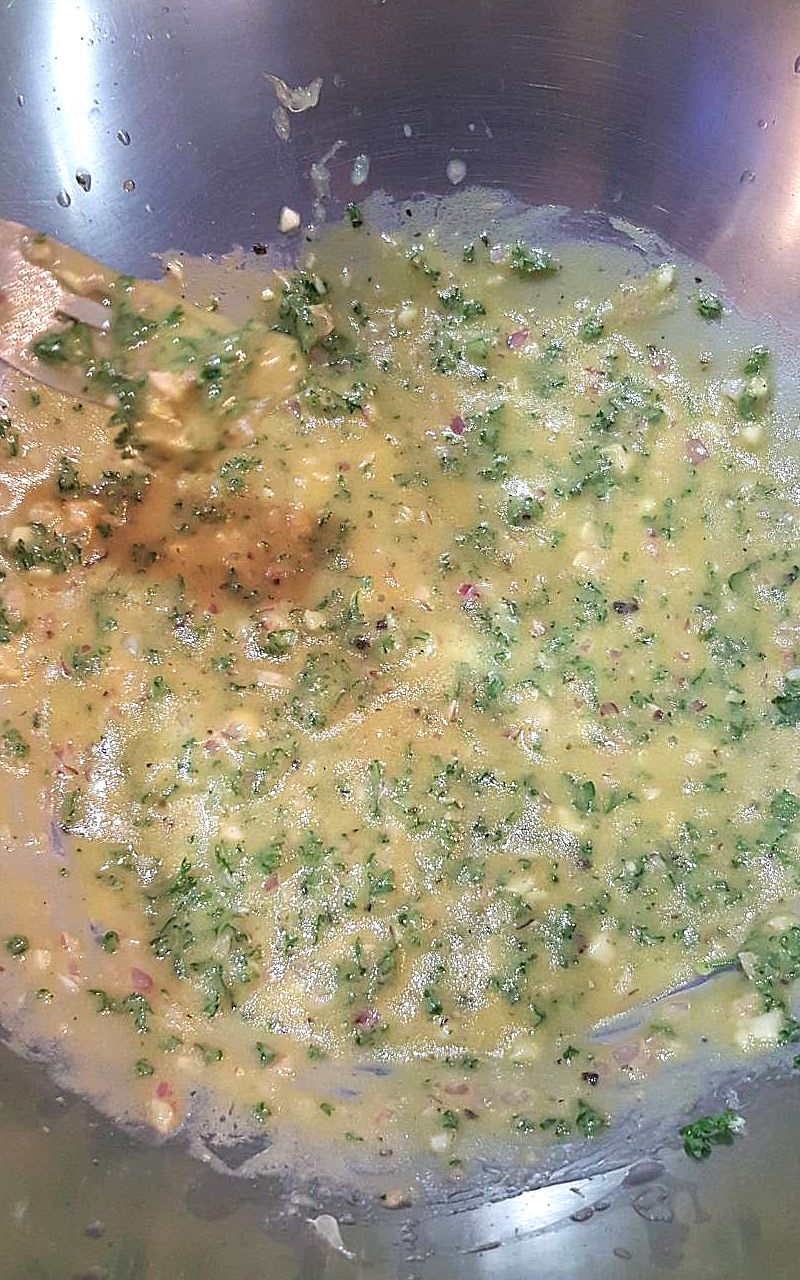
No quantities, no measure? You decide according to your taste, write down how much you use this time, then you will tune up the proportions to make it exactly to your liking after a few times. It will be your personal recipe. Aim for a creamy sauce that you can use for dipping, or as salad dressing by adding a little extra olive oil when you toss your greens.
- A large bowl is easier to work with.
- Salt and pepper first. It is easier to see how much you put in!
- Cornichon juice. Made in France is generally the right flavor.
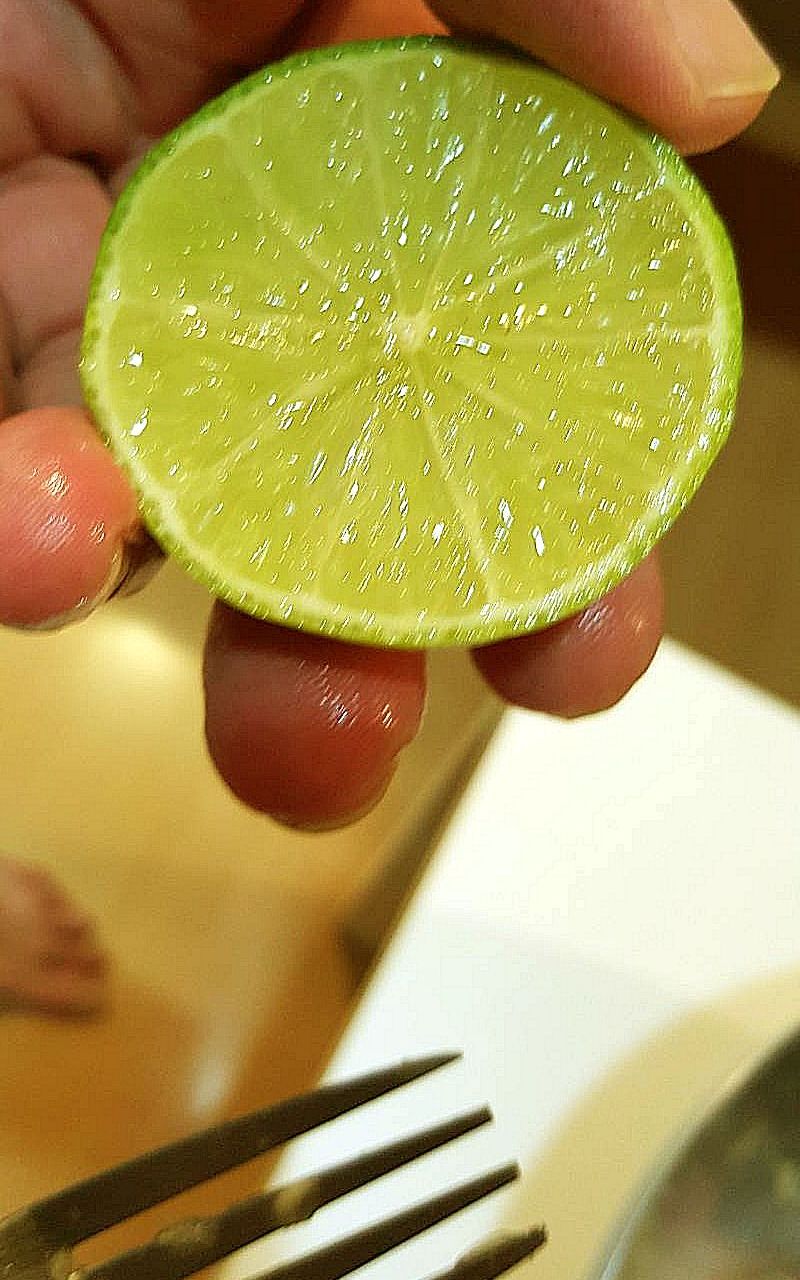
- Lime juice, or (not too much) lemon juice, if you like.
- Dijon mustard, generously!
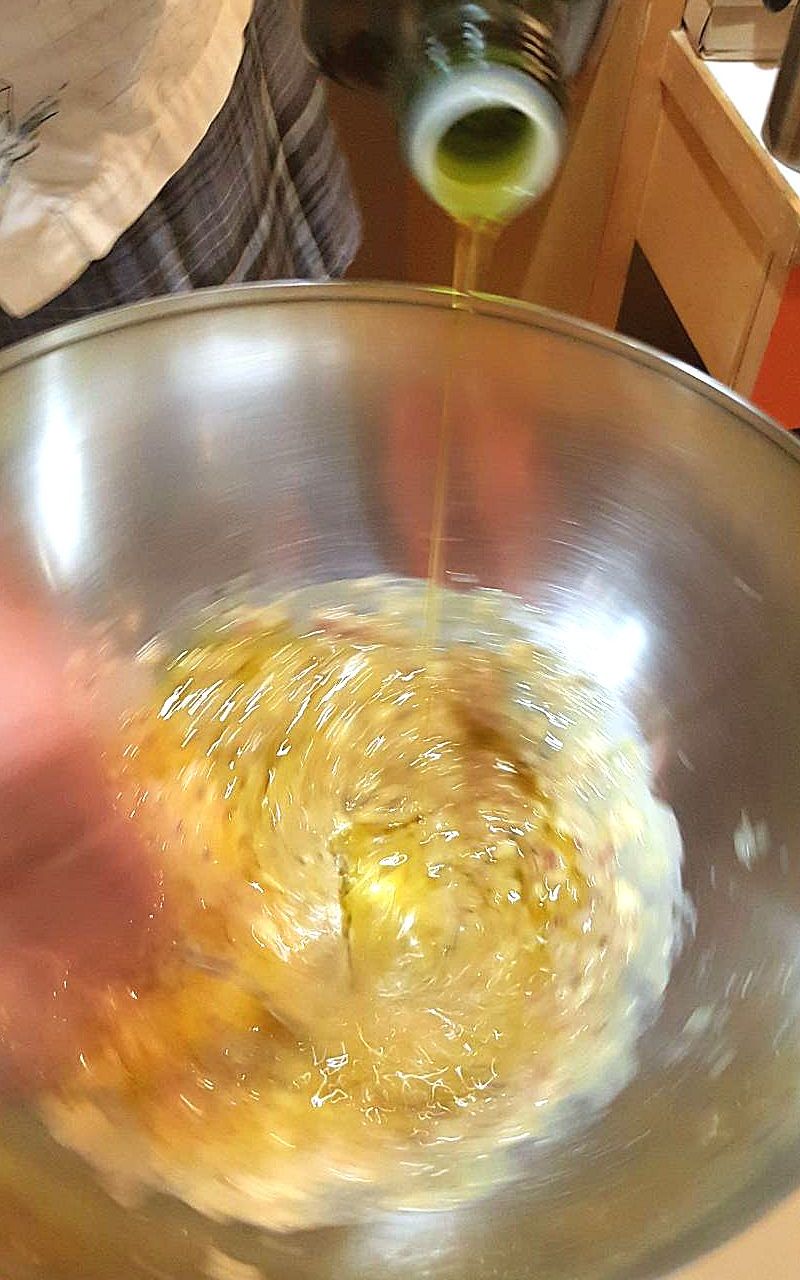
- Olive oil - Virgin, cold press, first press ... the best oil really matters.
- Garlic and shallots. How much depends on personal preferences.
- Herbs! Fresh is best, dry is fine. Rosemary, thyme, marjoram and oregano are the foundations, add or delete to your taste.
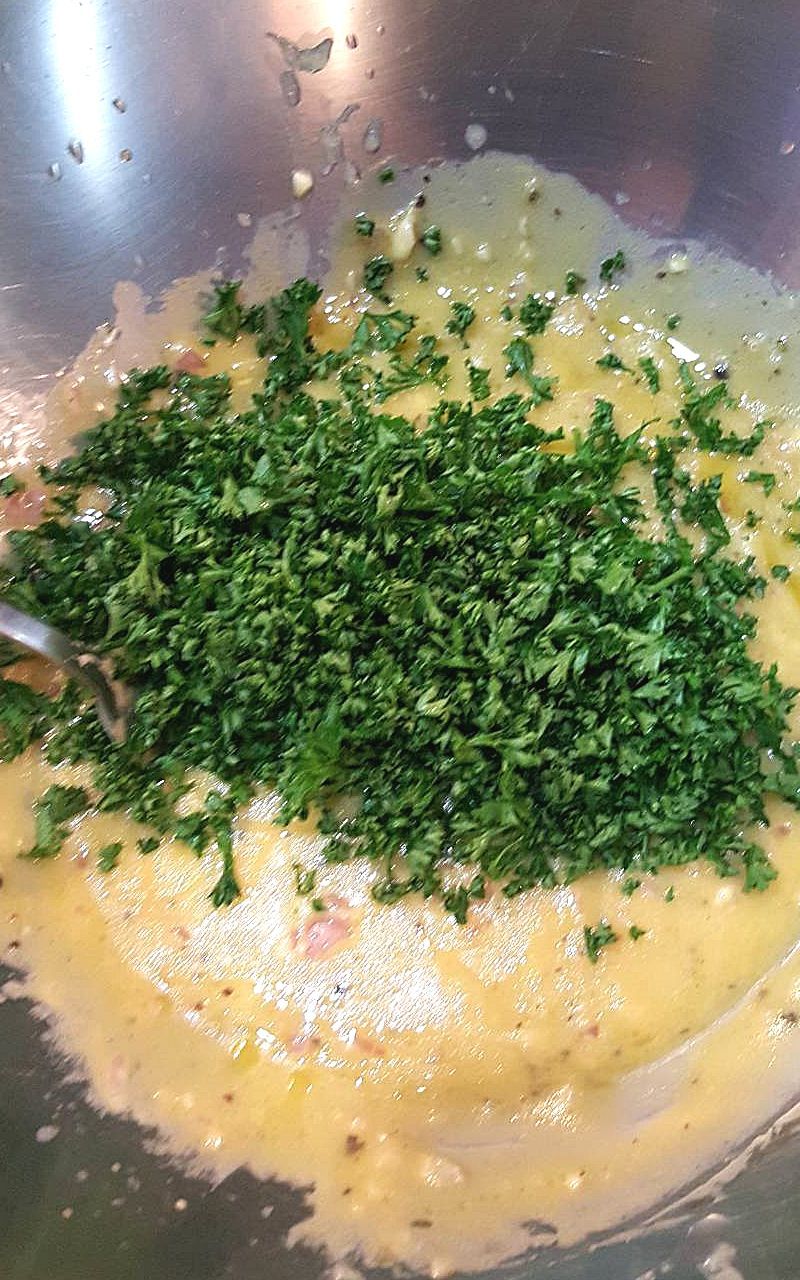
- Parsley is best added when you use the sauce as its flavor is short lived, and it discolors quickly.
That's the basic everyday sauce. Get creative! You can add chopped cornichons, fresh raspberries, or blue cheese, Not all in the same batch of course.
On a platter of cheese as a dipping sauce for the bread, I would also place crushed walnuts and pear puree as both are perfect matches for cheese.
The knight of Albignac
The knight of Albignac is the guy who changed the way people make great salad dressing! Oil and vinegar dressing goes back to ancient times with Greeks and the Romans both figured out that combining these two makes you want to eat healthy greens. D'Albignac added mustard to the mix. And that's how he became famous? Not quite. Adding the mustard was a great idea, but what made him famous is the way he went about to promote it, and make a a good deal of money. Being an early entrepreneur, he went to Silicon Valley, I mean London at the time, as that is where things happened back then. The fact that it was around the time of the French Revolution in 1789, fleeing to London was a wise choice to avoid the possible loss of his head to the guillotine. He was a noble from the Limousin region in the center of France.
So now, we have d'Albignac in London with his great recipe and the entrepreneur spirit. What he did was to package his creation in a fancy wooden box, called it the "Fashionable Salad-Maker" and market his way into London's upper class, offering his services of salad-making with much hype. He got noticed by another Frenchman, Jean Anthelme Brillat-Savarin, who published a book that is considered to be the foundation of French Culinary Arts, "The Physiology of Taste" in 1825. And as Brillat-Savarin included the vinaigrette of d'Albignac, it was like being inducted in Académie Française where the life members are called les immortels ("the immortals" in English).
What Brillat-Savarin wrote about d'Albignac
This is the English translation from the original 1825 book. Reference: The Project Gutenberg eBook of The Physiology of Taste; Or, Transcendental Gastronomy
"I prefer however to tell of a Frenchman, who became very rich at London, from the skill he displayed in making salad. He was a Limousin, and if I am not mistaken, was named Aubignac, or Albignac. Poor as he was, he went, however, one day to dine at one of the first restaurants of London. He could always make a good dinner on a single good dish.
While he was discussing a piece of roast beef, five or six dandies sat at the next table, and one of them advanced and said, "Sir, they say your people excel in the art of making a salad. Will you be kind enough to oblige us?" After some hesitation d'Albignac consented, and having set seriously to work, did his best. While he was making his mixture, he replied frankly to questions about his condition, and my friend owned, not without a little blushing, that he received the aid of the English government, a circumstance which doubtless induced one of the young men to slip a ten pound bank bill into his hand.
He gave them his address, and not long after, was much surprised to receive a letter inviting him to come to dress a salad at one of the best houses in Grosvenor square. D'Albignac began to see that he might draw considerable benefit from it, and did not hesitate to accept the offer. He took with him various preparations which he fancied would make his salad perfect as possible. He took more pains in this second effort, and succeeded better than he had at first. On this occasion so large a sum was handed to him that he could not with justice to himself refuse to accept it. The young men he met first, had exaggerated the salad he had prepared for them, and the second entertainment was yet louder in its praise. He became famous as "the fashionable salad-maker," and those who knew anything of satirical poetry remembered:
Desir do nonne est un feu pui devore,
Desir d'Anglaise est cent fois piri encore.
This is old French, your translator will choke on that! This is my best guess from my vague memories of old French:
Desire bar none is a fire then devour,
Desire of English woman is a hundred times worse then.
D'Albignac, like a man of sense, took advantage of the excitement, and soon obtained a carriage, that he might travel more rapidly from one part of the town to the other. He had in a mahogany case all the ingredients he required. Subsequently he had similar cases prepared and filled, which he used to sell by the hundred. Ultimately he made a fortune of 80,000 francs, which he took to France when times became more peaceful. When he had returned to France, he did not hurry to Paris, but with laudable precaution, placed 60,000 francs in the funds, and with the rest purchased a little estate, on which, for aught I know, he now lives happily. His funded money paid him fifty per cent.
These facts were imparted to me by a friend, who had known D'Albignac in London, and who had met him after his return."
Now you know how to impress!
Now you know how to impress your guests with your own vinaigrette. Don't expect to receive a ten pound bank bill for your show, but it is certainly worth a try!
More lost recipes ...